
Planning a Myrtle Beach Golf Package in 2026: An Updated Guide

The basics of a Myrtle Beach golf trip have not changed. You still get a lot of golf in a small area, and you still play courses that would be a destination on their own anywhere else. What has changed is the timing, the shape of the groups we book, and the questions organisers are asking before they commit. Here is where things stand in 2026.
Book the peak weeks earlier than you think you need to

Late March through early May and mid September through early November remain the two windows everyone wants. Groups that used to call eight weeks out are now calling in the autumn for the following spring, and the best tee time blocks on the well known courses go first. If your dates are fixed, for a bachelor party, a company trip or an annual outing that has always run the same week, treat booking as the first job rather than the last.
The flip side is that the shoulder weeks either side of those windows are still open much later, and the golf is close to identical. Late February, early June and early December all play well, and a group willing to shift by two weeks usually gets a stronger lineup of courses for the same trip.
Decide the group before you decide the courses
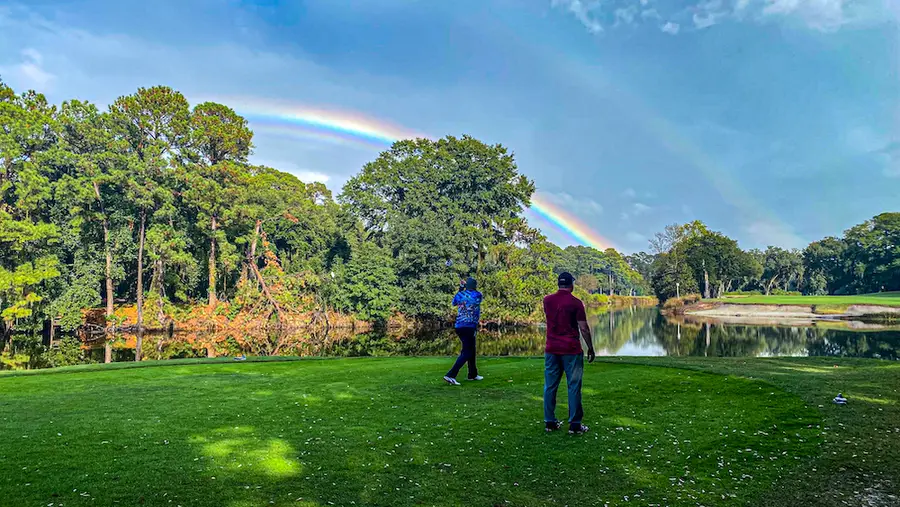
The single biggest predictor of a good trip is honesty about who is coming. A group of eight where three players are new to the game wants a different set of tee sheets than a group of eight single figure handicaps. Ranked lists do not know that. Before you shortlist anything, write down the number of players, the spread of ability, how many rounds people genuinely want per day and whether anyone is travelling with a non golfing partner.
With more than sixty courses on the Grand Strand, that answer narrows the field fast. See the full list on the golf courses page.
Mix the lineup instead of stacking the hard rounds
Four championship layouts in four days sounds great when you are booking in January and feels very different by Thursday afternoon. The trips people repeat tend to open with something playable, put the toughest course on day two or three when everyone has found their swing, and finish with a course that is enjoyable rather than punishing. Nobody wants their last memory of the week to be a lost ball count.
Tee times shape the day more than the course does

Morning rounds give you a predictable pace and a free afternoon. Afternoon rounds suit arrival days and groups that want a slower start. Most well built weeks use both. We wrote this up in more detail in morning versus afternoon tee times, and it is worth reading before you lock a schedule.
One practical note for 2026: pace of play on the busiest courses in peak season is genuinely slower than it was a few years ago. If you are planning thirty six holes in a day, build in a real gap between the two rounds rather than a hopeful one.
Keep the driving short

The Grand Strand runs roughly sixty miles north to south. Two courses can both be in Myrtle Beach on paper and still be forty minutes apart in traffic. Group your rounds by area, north end, central or south, and let the lodging sit near the middle of whichever cluster you are playing most. An hour saved in the van each morning is an hour nobody argues about.
Ask what the lodging actually includes

Condos and villas suit groups that want their own rooms, a kitchen and somewhere to sit in the evening. Resort rooms suit smaller groups who would rather be walking distance from dinner. Neither is automatically the better value, and the thing to check is what comes with it: how many bedrooms and bathrooms, whether the beds are what you were told, parking, and whether there is a resort fee sitting outside the quote.
Quote the whole trip as one number

This is the part that has changed most in how people shop. Adding up a room rate here and green fees there tells you very little, because the tee time you were quoted may not exist on the day you want it. Ask for the golf, the lodging and the tee times as a single price for the trip, with the courses and dates named. That is a number you can take back to the group and collect against.
Ask what happens if the group shrinks. Numbers move between booking and travel, and the answer to that question should be clear before you pay anything.
Weather, and the sensible way to plan around it
Summer means heat and a real chance of an afternoon thunderstorm, which is why early tee times dominate June through August. Winter golf is very playable, with the caveat that a cold snap can slow greens and shorten the comfortable part of the day. Whatever the season, ask about each course rain policy at the time of booking rather than at the turn.
The short version
Book the peak weeks early or move to the shoulder weeks. Build the lineup around the group you actually have. Balance the hard rounds, keep the driving short, check what the lodging includes and get the whole trip quoted as one price.
If you would rather hand that over, tell us your dates, your group size and roughly what everyone shoots, and we will put a package together. Call (888) 796-4652 or build a package online.
Want this planned for you?
Tell us the dates and the group. We quote the golf, the lodging and the tee times as one price.


